
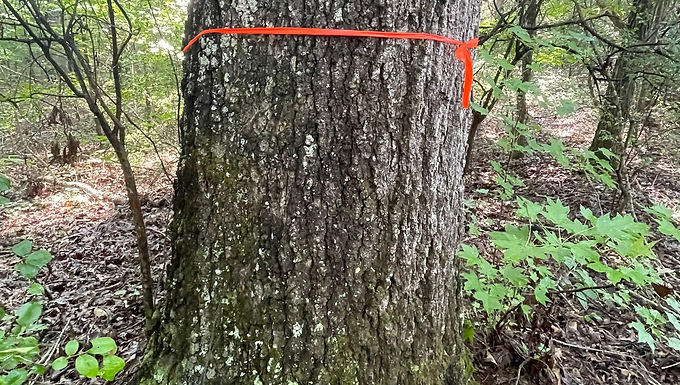
The timber deed describes a clearcut of merchantable timber on the designated parcels, while also recognizing hardwood trees that would be marked to leave.
That distinction mattered to us. The long-term objective was to open a substantial amount of land, particularly land that could eventually support pasture and farm operations, but that did not mean every tree had to disappear.
Selected mature hardwoods and other desirable trees could continue to provide shade, wildlife value and visual character. We also considered practical future issues such as fencing and access. Some trees that might otherwise have been left could become maintenance or safety problems once fences or other improvements were installed.
The harvest plan therefore had to serve two purposes: define what the timber buyer was purchasing and shape the starting condition for the next phase of the property.
In practice, logging would inevitably cause some incidental damage to vegetation and retained trees. The deed acknowledged that reality. The important part was making the intentional decisions about what should be harvested and what should remain before the equipment began moving.
Observations
• A clearcut does not have to mean literally removing every tree.
• Selected hardwoods were intended to remain.
• Leave-tree decisions affect appearance, wildlife, shade and future maintenance.
• Future fencing and property use should be considered before deciding which trees to retain.
• Harvest planning is the bridge between a timber transaction and the land's next use.
Actions Taken
We identified the areas intended for harvest and the trees, particularly selected hardwoods, that were to remain. Those decisions were incorporated into the agreement and communicated before active harvesting.
Next Step
Timber Deed / Contract